Preflight Check
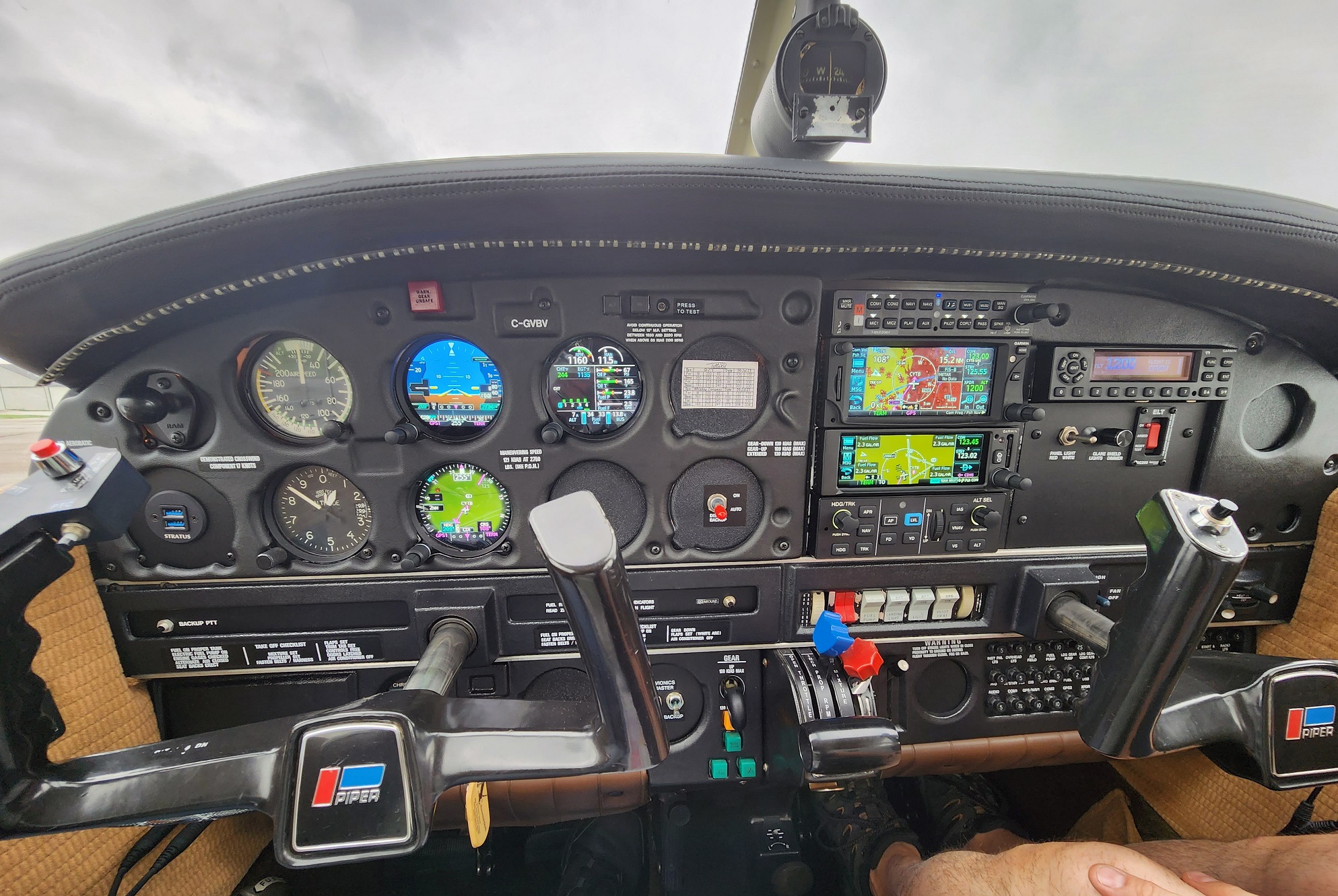
Documents ··· On Board.(Airworthiness, Registration, Journey Log, Insurance, POH, W&B, Emergency Chklist)
Fire Ext ··· Secured & Not discharged
First Aid Kit ··· On Board.
Controls ··· Free of motion and Correct.
Fuel Selector ··· Off then Desired Tank
Clock ··· Local Time and Functional.
Compass ··· Check for any leak & compass card present.
Avionics Master,Electrical Switches, Heater & Froster, Fan-Air, Alt Air ··· Off
ELT ··· Switch is armed position.(Do not turn on unless it is emergency.)
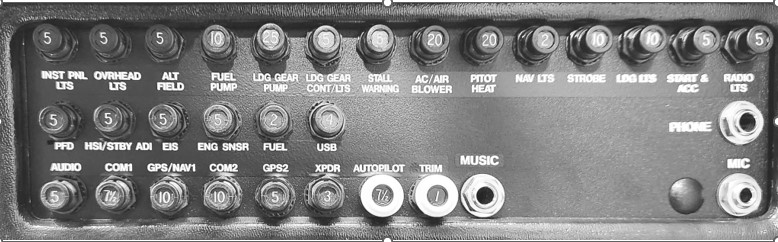
Circuit Breakers ··· In.
Mixture ··· Idle Cut Off.
Propeller ··· Full Forward.
Manifold ··· Closed (All the way down).
Gear Handle ··· Down Position.
Mags ··· Left and Right Switch off.
Flaps ··· Easily move all the position, then extend fully.
Trim ··· Check & Set.
Emergency Gear Lever ··· Up Position. If it is down, not be able to retract.
Battery Master ··· Turn On.
Hubbs Time ··· Noted.
Fuel Gauges ··· Check adequate fuel.
3 Gear Green Lights ··· Lit Up. (If Panel lights are on, this will be dim.)
Annunciator (Alternator & Oil) ····· ON.
External Lights / Pitot Tube: ··· Turn on / Check Visually / Intact
Turn on / Check Visually / Intact
Check - Pitot Tube Warms up
Check for Stall Warning Horn & Free of motion.
Electrical Switches ··· Off.
External Surface Check
All Tie/ Cowl & Pitot Cover ··· Removed.
Right Flaps ··· Checked.
Actuating arm & bonding strap – free of motion.
Right Aleron ··· Checked.
Actuating arm ··· free of motion.
Right Wing Tip/ Bulb/surface ··· Checked.
Right / Left Windows ··· Cleaned.
Right / Left Engine Cowl Latches ··· Locked.
Right side fresh air intake ··· Free from any obstruction.
Left side small hole by cylinder #2 ··· Check for any debris.
Propeller ··· No damage & Screws Intact.
Alternator Belt ··· Check for Tension.
Landing Light ··· Properly in-place.
Left side Temp Probe ··· Free & Attached.
Right Wing Tip / Bulb/surface ··· Checked.
Left Aleron ··· Checked.
Left Flaps ··· Checked.
Top Antenna ··· GPS, COM1, COM2, ELT.
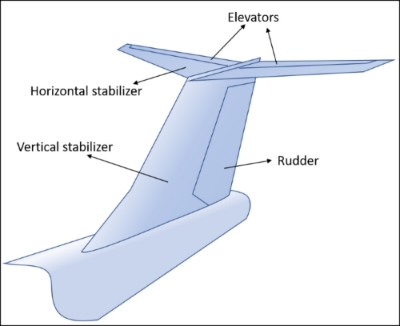
LEFT & Right Stabilator ··· Intact, free of motion, Tail Cone bolt in place.(Give a little tug to ensure Intact.)
Rudder ··· Slight Free of motion (No push).
Fuel ··· Check Cap cascade, Qty, Drained.,
Fuel Drain Check for any contamination / water. Fuel should be blue.
Oil Quantity ··· Check for 6 – 8 qt.
Oil Dip Stick ··· black rubber cascade.
External Underneath Check
Exhaust ··· Attached & Intact.
Fuel Vent ··· Clear of any Obstruction.
Gear Assembly:
Tire Inflated. Nose 27 | Main 30PSI
Tire thread good.
Oleo Strut – Should be 2.75” ±0.25” (3 finger space).
Nose Struct – 2.50inch ±0.25inch
Brake Calibour – no red fluid leak.
Gear door – properly attached to the aircraft.
Down Lock Switch – making contact with down lock hook. No bent.
Up Limit switch – should be straight & No bent.
Under Left Wing – Oil Breaher ·· Check for any debris.
Clean Trunnion Assembly (Siver area) and spary a bit lubricant
Next to the Oil Breather: Tube to vent fuel from engine driven fuel pump when excessive pressure.
Next to the Oil Breather: Tube to vent fuel from electric boot pump.
Next to the Oil Breather: Vent from intake system of the aircraft – Over prime situation, engine properly not shutdown, fuel will leak through sniffer valve out through this valve.
Next to the Oil Breather: Lower Service GPS Antenna ··· Ensure not thick coding of oil.
Battery Vents ··· Free from Obstruction.
Baggage Door ··· Closed.
Pre Start
Passengers Briefing: see section - Passenger SAFETY Briefing
| ✪ | Welcome aboard |
| S |
|
| A |
|
| F |
|
| E |
|
| T |
|
| Y |
|
Passengers ··· Briefed.
Flaps ··· Up.
Fuel Selector ··· Lowest Tank.
Doors ··· Secured.
Brakes ··· Set.
- Note: Cranking period – 10 sec. with 20 sec. rest between attempts. Max attempts 6. If no start, cool for 30 minutes.
Starting Engine – Cold
Prop Area ··· Clear.
Manifold ··· ½ Inch Open.
Propeller ··· Full Fine.
Battery Master / Fuel Pump ··· ON.
Mixture · Prime (Mixture full rich for 3 seconds) then ICO.
Mags - Keep Right OFF position and Left ON position ··· Push the button to start, Once started ON the right Button
When engine engages - Mixture full rich.
Engine Start – Hot
Prop Area ··· Clear.
Manifold ··· ½ Inch.
Propeller ··· Full Fine.
Mixture ··· Idle Cut-Off.
Battery Master / Fuel Pump ··· ON.
Mags - Keep Right OFF position and Left ON position ··· Push the button to start, Once started ON the right Button
When Engine Start · Mixture Full Rich.
Engine Start – Flooded
Prop Area ··· Clear.
Manifold ··· Open Full.
Battery Master / Fuel Pump ··· ON.
Fuel Pump ··· Off.
Mixture ··· Idle cut-off.
Mags - Keep Right OFF position and Left ON position ··· Push the button to start, Once started ON the right Button
Mixture ··· Mixture Full Advance.
Manifold ··· Retard.
Mixture ··· Lean.
Starting With External Power Source
Master Switch ··· Off.
All Electrical equipment ··· Off
Terminals ··· Connect
External Power plug ··· Insert in fuselage
Proceed with normal Start
Throttle ··· lowest possible RPM
External Power Plug ··· disconnect from Fuselage
Master Switch ··· ON - Check Ammeter
Oil Pressure ··· Check
After Start
Oil Pressure ··· Green (in 30 Sec). If not GREEN stop the engine and trouble shoot.
Warm-up ··· 1400 -1500 rpm. (Avoid prolonged idling at low rpm).
Ammeter ··· Check Charging - Turn off Alternator, then On.
Fuel Pump ··· Off.
Start Up Time ··· Noted.
Avionics Master ··· ON.
Beacon / Nav Light (same switch) ··· ON.
Transponder ··· Standby.
Radio / Instruments / Nav Aids ··· Set.
Ensure Oil Temp in Green before Taxi.
Rolling Break Test ··· Checked.
Instruments ··· Taxi Test.
ATIS ··· Obtain.
Taxi Clearance for run-up ··· Obtain.
Run Up
Area ··· Clear / Into Wind / Wheel Straight.
Brakes ··· ON.
Fuel Selector ··· Switch.
Throttle ··· 1000 rpm.
Temp / Pressure ··· Check in Green.
Mags ··· Check (Max 172/50 Difference – At low rpm, the difference might be larger than at high RPM).
Mixture ··· Rich.
Propeller ··· Full Fine.
Throttle ··· 2000 rpm.
Temp / Pressure ··· Check in Green.
Mags ··· Check (Max 172/50 Difference).
Mixture ··· Lever down until manifold drops, then go back.
- MP drop/roughness → you’ve gone past best power, approaching too lean.
Propeller Cycle: Do not go lower than 1500 rpm.
Prop lever down slowly & check:
- Increase in Manifold & Dropping rpm.
- Oil pressure – should be a drop.
- No oil sprayed on windshield.
Propeller Cycle: Do not go lower than 1500 rpm.
Alternate Air ··· Check - Closed.
Alternator ··· Check Charging by tuning on/off ALT switch.
Throttle ··· Idle.
Throttle ··· 1000 rpm.
Call GRN:118.4 For Taxi Clearance
Before Take-Off
Take off Distance (grn roll) ···· 1025 ft.
TOGO -> HDG:Runway -> Set Altitude -> Desired -> IAS:87KT.
Master, Fuel Pump, Landing, Strobe Light, Pitot Heat (as Required) ··· ON.
Transponder ··· ALT.
Instruments / Radio ··· Set.
Fan - AC ··· Off.
Mixture ··· Rich.
Propeller ··· Fine.
Trim ··· Set.
Flaps ··· As Required.
Controls ··· Free.
Door ··· Latched (top and bottom).
Take-off Pilot Briefing:
Frequencies set
Weather conditions / Winds
Runway __
Flap settings __°
Speeds: Rotate 65-75KIAS & Pitch for 76KIAS, after positive Rate - 87 KIAS
Departure routes / Navaids Set
Initial Altitudes ____
Our Go-No Go point will be intersection of the runway.
If Engine fails while rolling ··· Stop stright a head.
If Engine fails after take-off and not above circuit altitude ··· Land straight a head
If Engine fails after take-off and above circuit altitude ··· Consider comging back to the field
Take-off Briefing ··· Complete.
Take off Time ··· Noted.
Call TWR:120.1 For take-off Clearance.
Normal Take Off: (Max Weight Take off – 2750 lbs).
Windsock··Check Direction (left/right).
Heading Indicator··· Confirm Runway.
Manifold Pressure ··· Full.
Accelerate → 65-75 KIAS → Airspeed Positive → GO/NO GO → If GO → Rotate.
Pitch ··· 76 (Vy - Gear Down & Flap Up).
When Altitude Positive Rate:
Tap on the brakes to stop the wheel spinning. & Gear Up.
Manifold ··· 25 Inch.
Propeller ··· 2500 rpm.
Temps/Pressure ··· Green.
Landing/Strobe Light ··· Off.
Once reached 87KIAS: Hit: IAS, Nav, AP.
Shortr Field Take Off: (Max Weight Take off – 2750 lbs).
Windsock··Check Direction (left/right).
Heading Indicator··· Confirm Runway.
Flaps ··· 25° (second notch)
Manifold Pressure ··· Full.
Accelerate → 50-60 KIAS depending on aircraft weight → Airspeed Positive → GO/NO GO → If GO → Rotate.
After breaking ground, accelerate to 55-65 KIAS depending on Aircraft weight
Pitch ··· 77 (Vy - Gear Down & Flap Down).
When Altitude Positive Rate:
Tap on the brakes to stop the wheel spinning. & Gear & Flaps Up.
Manifold ··· 25 Inch.
Propeller ··· 2500 rpm.
Temps/Pressure ··· Green.
Landing/Strobe Light ··· Off.
Once reached 87KIAS: Hit: IAS, Nav, AP.
Soft Field Take Off: (Max Weight Take off – 2750 lbs).
Windsock··Check Direction (left/right).
Heading Indicator··· Confirm Runway.
Flaps ··· 25° (second notch)
Manifold Pressure ··· Full.
Accelerate → 50-60 KIAS → Airspeed Positive → GO/NO GO → If GO → Rotate.
After breaking ground, accelerte to 55 to 65 KIAS depending on aircraft weight
Pitch ··· 77 (Vy - Gear Down & Flap Down).
When Altitude Positive Rate:
Tap on the brakes to stop the wheel spinning. & Gear Up.
Manifold ··· 25 Inch.
Propeller ··· 2500 rpm.
Temps/Pressure ··· Green.
Landing/Strobe Light ··· Off.
Once reached 87KIAS, Flaps ··· retract slowly
Hit: IAS, Nav, AP.
Climb (APT:Attitude, Power, Trim)
Fuel Pump ··· On.
Temps/Pressure ··· Check.
Vy - Best Rate of Climb:
- Gear up, flaps up ··· 87 KIAS.
- Gear down, flaps up ··· 76 KIAS.
Vy - Best Rate of Climb:
- Gear up, flaps up ··· 87 KIAS.
- Gear down, flaps up ··· 76 KIAS.
Vx - Best Angle of Climb:
- Gear up, flaps up ··· 77 KIAS.
- Gear down, flaps up ··· 70 KIAS.
Fuel Pump ···· Off at altitude reached.
Descend (PAT: Power, Attitude, Trim)
Fuel Pump ··· On.
Throttle ··· Reduce.
Yoke ··· Push Down / Adjust as required.
Cruise
NAV, AP, FD, IAS ··· ON
Normal max power ··· 75% Set (24”/2400).
Temps/Pressure ··· Check.
Mixture ··· Lean.
Switch Fuel Selector every 30 minutes: Fuel Pump On → Switch Tank → Engine Running → Fuel Pump Off.
Flight Instruments ··· Check.
Check Cylinders:
Pre-Landing
Landing Distance (grn roll)··· 615ft.
Weather/ATIS ··· Obtained.
Altimeter ··· Set.
Temps / Pressure ··· Green.
Seat Belt ··· Fasten.
Passenger Briefing ··· Complete.
Pilot Briefly:
Runway (Length, Condition)
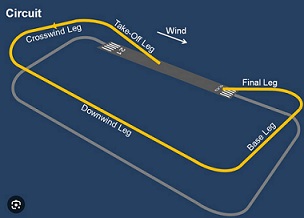
Routing to Runway (circuit pattern)
Weather conditions, cross wind)
Approach Criteria (Speed, descent rate, slope)
Flap and Getar Considerations
Landing Speed - 74KIAS
Go-around point and plan
Call TWR 120.1: e.g. at Port Perry
Down Wind
Manifold Pressure ··· 20 – 22 Inch.
Propeller ··· 2400 rpm.
Mixture ··· Rich.
Gear ··· Down ≤ 130KIAS.(Ensure Panel Lights off for Gear Indication.)
Flaps ··· 10° - Airspeed ≤ 108 KIAS.
Trim ··· Set.
Brakes ···Check/Feet Clear.
Mags ··· Both.
Master, Fuel Pump, Landing Light ··· ON.
Fuel Selector ··· Fullest Tank.
Temps/Pressures ··· Green.
Seats Belt ··· Fastened.
Air – AC ··· Off.
Base
Manifold Pressure ···15 Inch.
Flaps ··· 20°.
Gear ··· Check for Down & 3 Green.
Final Approach (Max Landing – 2750 lbs)
Flaps ··· Full / Desired.
Landing Approach – Flaps 40° ··· 74 KIAS.
WindSock - Wind from Left or Right.
Landing Clearance ··· Yes.
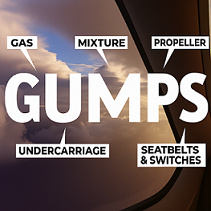
GUMPS CHECKS:
G - Gas (Fuel) ··· Switch to Fullest Tank (Fuel Pump is already ON).
U - Gear Down & 3 Green light ON.
M - Mixture ··· Full Rich.
P - Propeller ··· Full Fine.
S - Switches (Landing Light) - As required.
Short Final
WindSock - Wind from Left or Right.
Landing Clearance ··· Yes.
Overshoot (PAT: Power, Attitude, Trim)
Props ··· Fine.
Mixture ··· Rich
Throttle ··· Full.
Positive Climb, Flaps up ··· in states
Missed Approach
Set ··· Missed Approach Altitude.
Hit ··· TOGO.
Set ··· Full Power.
Flaps ··· Up.
Hit ··· Nav.
After Landing
Throttle ··· 1000 RPM.
Propeller ··· Full Fine.
Mixture ··· Lean.
Fuel Pump ··· Off.
Transponder ··· Standby.
Lights (Taxi Light) ··· As Required.
Flaps ··· Retracted fully.
Landing Time ··· Noted.
Flight Plan ··· Closed.
Call GRN 118.4: Taxi to T2 Hangar.
Shutdown
Fuel Pump/Lights/Air - AC ··· Off.
Avionics Master ··· Off.
Throttle ··· Idle.
Ignition ··· Live Mag Check.
Throttle ··· 1000 rpm.
Mixture ··· ICO.
Master / Mags ··· Off.
Passenger SAFETY Briefing
S - Seat Adjust. Seatbelt latch/unlatch, Doors/windows latch & Unlatch
A - Air Vent, Actionin case of any passenger emergency
F - Fire Extinguisher.
E - Exit door, Emergency evacuation plan, First Aid Kit & ELT
T - Look out traffic for me.
Y - Any question?
Pre-Takeoff Passenger Briefing
We are ready for takeoff.
Stow any loose objects
Stay free of my controls
Keep your seat belt on
Refrain from talking unless it is an emergency.
Are you good to go?
Pre-Takeoff Pilot Briefing
Frequencies set
Weather conditions / Winds
Runway __
Flap settings __°
Speeds: Rotate 65-75KIAS & Pitch for 76KIAS, after positive Rate - 87 KIAS
Departure routes / Navaids Set
Initial Altitudes ____ feet
Our Go-No Go point will be intersection of the runway.
In the event of an engine failure during the takeoff roll we will stop straight ahead.
If airborne, we will pitch for the 79kt, and land straight ahead.
If an engine failure occurs above 1000 feet AGL we will consider returning to the airport.
Once made to the field, set flaps as required.
Unlatch Cabin door.
Mixure cut, fuel off, mags off & master off.
Are you good to go?
Request Taxi to Main Apron
OSHAWA GROUND, Piper Arrow, Golf Victor Bravo Victor
Reply from Oshawa Ground: Victor Bravo Victor, Oshawa Ground
Oshawa Ground, Victor Bravo Victor
Over Tango 2
Requesting Taxi to Main Apron.
Enroute Radio Call
{some Place} Traffic
Piper Arrow, Golf Victor Bravo Victor
Over {some place} at {____} feet
enroute for {Destination}.
Request Transiton
{en-route ATC, ie., Toronto Center}
Piper Arrow, Golf Victor Bravo Victor
Over {some place} at {____} feet
request VFR transition through your airspace to {destination} maintaining {____} feet
Memory Aids
| ITPAID | Identification, Tail Number, Place, Altitude, Intention, Destination. |
| POISEE |
|
| FLARE |
|
| CIGAR |
|
| CRAFT |
|
| BLITTS |
|
| When Yes |
|
| When No |
|
Do & Don't
- Warm-up the engine at 1400 to 1500 RPM. Avoid prolonged idling at low RPM, as this practice may result in fouled spark plugs.
TIPS
Weather
- When Temperature and Dewpoint closer to each other, expect condensation, fog, percipitation, thunderstorms, icing
- When weather goes down, factor in: Low cloud, rain, lightening, thunderstorm, wind
- When wind gusts: Variability (sudden change in speed and direction), Turbulence, longer time in the air
Cruise Setting
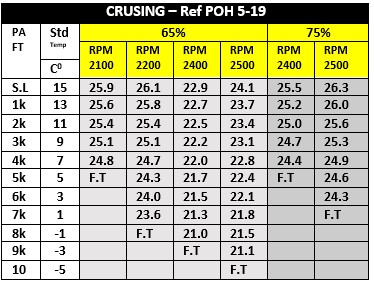
- Cruise 65% / 75%
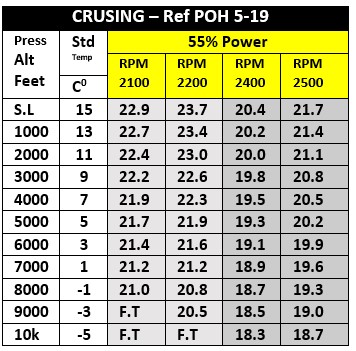
- Cruise 55%
Airspeed
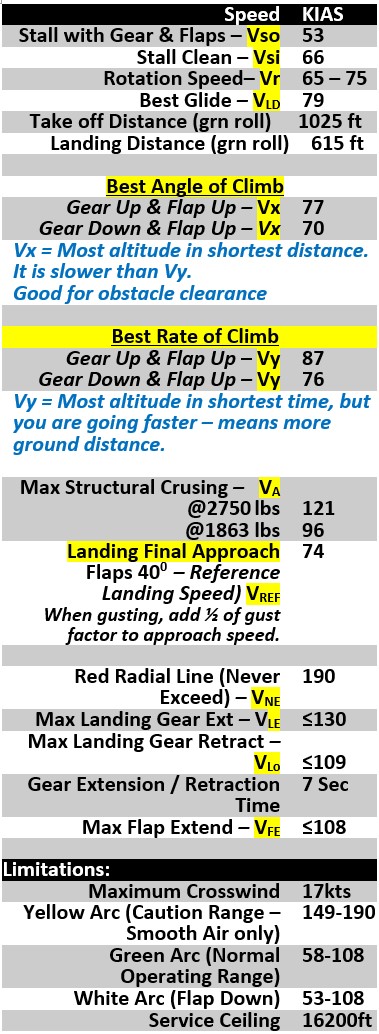
- Various Airspeeds
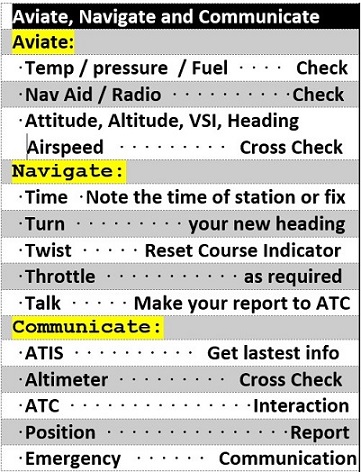
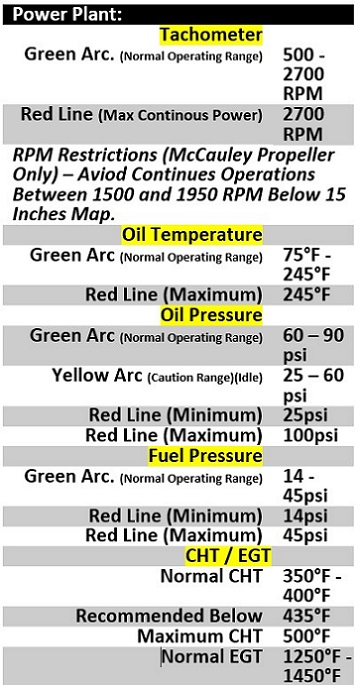
Power Plant
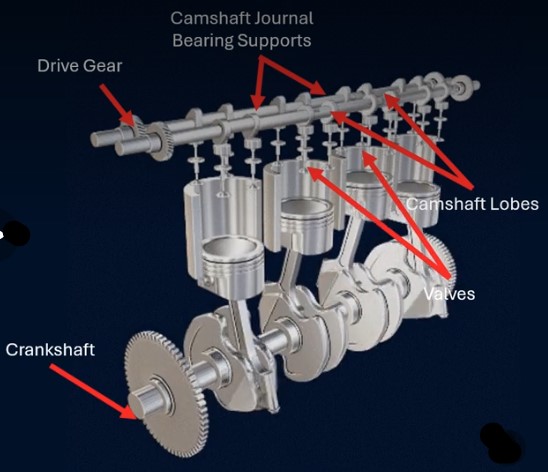
- Power Plant
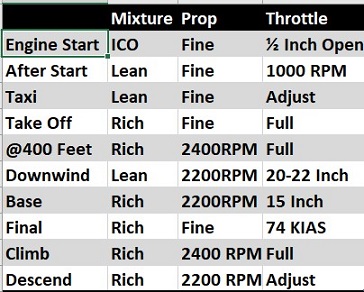
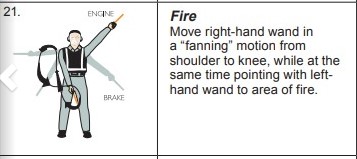



Engine Fire During Start
Mags ··· Crank Engine.
Mixture ··· Idle cut off.
Throttle ··· Open
Fuel Selector ··· Off.
Abandon if fire continues.
Engine Power Loss during Take Off
If sufficient runway → Leave gear down → Normal landing stright head.
Rough Area or Necessary to clear the obstructions:
Gear ··· Up.
Emergency Gear Lever ··· Locked in OVERRIDE ENGAGED Position.
If sufficient altitude has been gained to attempt to restart:
Maintain safe airspeed.
Fuel Selector ··· Switch to fullest tank.
Fuel Pump ··· ON.
Mixture ··· Check Rich.
Alternator Air ··· OPEN.
Emergency Gear Level ··· As Required.
If power is not regained, proceed with power off landing.
Rough Area or Necessary to clear the obstructions:
Gear ··· Up.
Emergency Gear Lever ··· Locked in OVERRIDE ENGAGED Position.
If sufficient altitude has been gained to attempt to restart:
Maintain safe airspeed.
Fuel Selector ··· Switch to fullest tank.
Fuel Pump ··· ON.
Mixture ··· Check Rich.
Alternator Air ··· OPEN.
Emergency Gear Level ··· As Required.
If power is not regained, proceed with power off landing.
Engine Power Loss in Flight
Fuel Pump ··· ON.
Fuel Selector ··· Switch to fullest tank.
Mixture ··· Check Rich.
Alternate Air ··· Open.
Engage Gauges ··· Check for Indication of cause of power loss.
If no Fuel Pressure · Check Fuel on fullest tank.
When power is restored:
Alternate Air ··· Closed.
Fuel Pump ··· Off.
If power is not restored prepare for power off landing.
Engine Failure - Power Off Landing
Trim ··· Set to 79 KIAS.
Locate Suitable Field & Establish Spiral pattern.
1000ft. above field at downwind.
Position for normal landing approach.
When field can easily be reached slow to 72 KIAS for shortest landing.
GEAR DOWN EMERGENCY LANDING:
Touchdowns should normally be made at lowest possible airspeed with full flaps.
When committed to landing:
Landing Gear ··· Down.
Throttle ··· Close.
Mixture ··· Idle cut-off.
Mags ··· Off.
Master Switch ··· Off.
Fuel Selector ··· Off.
Seat Belt ··· Fastened.
Gear Up Emerengcy Landing
In the event a gear up landing is required, proceed as follows:
Flaps ··· as desired.
Throttle ··· Idle cut-off.
Mixture ··· Off.
Mags ··· Off.
Fuel Selector ··· Off.
Seat Belt ··· Fastened.
Contact surface at minimum possible airspeed.
Fire In Flight
Source of fire ··· Check.
Electricial Fire (Smoke in Cabin):
Master ··· Off.
Vents ··· Open.
Cabin Heat ··· Off.
Land as soon as practicable.
Engine Fire
Fuel Selector ··· Off.
Throttle ··· Closed.
Mixture ··· Idle cut-off.
Fuel Pump ··· Off.
Heater / Air - AC ··· Off.
Proced with POWER OFF landing.
Loss of oil Pressure
Land as soon as possible and investigtate casuse.
Prepare for POWER OFF landing.
High Oil Temperature
Land at nearest airport and investigate the problem.
Prepare for POWER OFF landing.
Loss of Fuel Pressure
Fuel Pump ··· ON.
Fuel Selector ··· Check on full tank.
Alternator Failure
Verify Failure:
Reduce electricial load as much as possible.
Alternator circuit breakers ··· CHECK.
Alternator Switch ··· OFF for 1 second the ON.
If no output:
All Switch ··· Off.
Reduce electrical load as soon as practical.
If the battery is fully discharged, the gear will have to be lowered using the emerency gear extension procedure. Position lights will not illuminate.
Propeller Overspeed
Throttle ··· Retard.
Oil Pressure ··· Check.
Prop Control ··· Full DECREASE rpm, then set if any control avilable.
Airspeed ··· REDUCE.
Throttle ··· as required to remain below 2700 rpm.
Emergency Landing Gear Extension
Prior to emergency extension procedure:
Master (Batt & Alt) Switch ··· ON.
Circuit Breaker ··· Check.
Panel Lights ··· OFF (in daytime).
Gear Indicator bulbs ··· Check.
If landing gear NOT DOWN and lock:
Airespeed ···· Reduce below 87 KIAS
Landng Gear Selector Switch ···· Gear DOWN position.
Failed to lock down, move and hold the emergency lever down to the EMERGENCY DOWN position.
Still not lock down using above procedure, slow the aircraft to the lowest safe speed attainble using the lowest power setting required for safe operation and accomplish the following:
Landing gear does not check down, recycle Gear through up position, and then select gear DOWN
Spin Recovery
Rudder ··· full opposite direction of rotation.
Control Wheel ··· full Forward while neutralizing ailerons.
Throttle ··· idle.
Rudder ··· Neutral (while rotation stops)
Control Wheel ··· as required to smoothly regain level flight attitude.
Emergency Radios
| Emergency | 121.50 |
| Emergency Squawk |
|
| Communication Failure |
|
| Hijacking Squawk |
|
En-route
| VFR En-Route Advisory | 126.7 |
| Emergency | 121.5 |
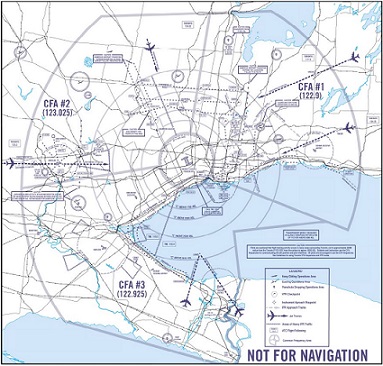
| CFA#1 | 122.9 |
| CFA#2 | 123.025 |
| CFA#3 | 122.925 |
| Toronto Center | 134.25 |
| London Flight Centre | 123.15 |
| FISE Remote Communications Outlets (RCOs) | 123.275, 123.375, 123.475, or 123.55 |
CYOO - OSHAWA
Info
- Reporting - 5NM, 3000'ASL
- Elevation - 460'
- ATIS ··· 125.67
- Set the Emergency: 121.5 on the second radio and turn on monitoring, Squawk: 7700
- Ground ··· 118.40
- Tower ··· 120.10
- Toronto Terminal ··· 133.40
- CFA #1 - 122.9
- CFA #2 - 123.025
- CFA #3 - 122.925
- Pilot-Pilot - 122.75
- Tower · 905-576-2398
- Duty Manager ··· 905-243-9376
Runway
RNAV 30
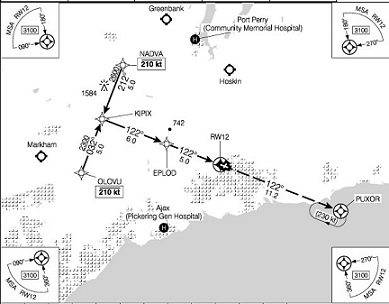
RNAV 12
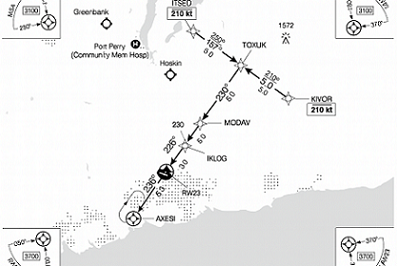
RNAV 23
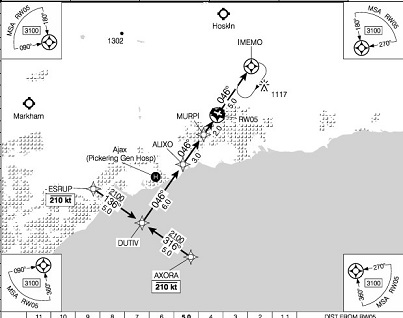
RNAV 05
CNC3 - Bramption-Caledon
Info
- ATIS ··· 120.825 / 133.1
- Set the Emergency: 121.5 on the second radio and turn on monitoring, Squawk: 7700
- Mulitcom ··· 123.3
- Toronto Terminal ··· 119.3
- Phone ··· 905-838-1400
CNJ4 - Orilli Rama Regional
Info
- Elevation - 725' MSL
Frequency
- Orillia Unicom - 122.8
- Airport Operator - 705-325-9838
Runway
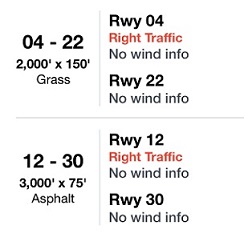
CNC4 - Guelph
Info
- Guelph Unicom - 123.0
- Phone - 519-716-0521
- Reporting - 5NM, 2800'ASL
- Elevation - 1100'
Runway
- RWY 06 Left Turn (2006 x 40 Asphalt)
- RWY 24 Left Turn (2006 x 40 Asphalt)
- RWY 14 Left Turn (2562 x 100 Asphalt)
- RWY 32 Left Turn (2562 x 100 Asphalt)
CNF4 - Lindsay
Info
- Reporting ... 5NM, 2300
- Elevation ... 895'
- Multicom ··· 122.725
- Toronto Centre ... 134.25
Runway
- RWY 13 Right Turn (3508 x 75 Asphalt)
- RWY 31 Left Turn (3508 x 75 Asphalt)
- RWY 03 Left Turn (2666 x 50 Grass)
- RWY 21 Right Turn (2666 x 50 Grass)
CNY3 - Collingwood Regional Airport
Info
Elevation ... 730'
AWOS ··· 122.175
Unicom ··· 122.85
Toronto Center ... 124.025
CYQA - Muskoka
Info
- Reporting - 5-10 NM
- Elevation - 918'
Frequency
- AWOS - 124.575
- Timmins Radio - 122.3
- VFR En-Route Advisory - 126.7
Runway

CYGK - Kingston
Elevation ··· 303'
Reporting ......
ATIS ··· 135.55
Set the Emergency: 121.5 on the second radio and turn on monitoring, Squawk: 7700
Mulitcom ··· 122.5
London Radio ··· 126.7
London FIS ··· 123.55
Montreal Centre ··· 135.05
Phone ··· 905-838-1400
101NM east of CYOO.
CYKF - Waterloo
Elevation ··· 1054'
Reporting ··· 5NM, 4000'ASL
ATIS ··· 125.1
Set the Emergency: 121.5 on the second radio and turn on monitoring, Squawk: 7700
Ground ··· 121.8
Tower ··· 126.0
Tower ··· 118.55
Toronto Center ··· 128.275
RWY ··· 08 Left Turn (7003 x 148)
RWY ··· 26 Left Turn (7003 x 148)
RWY ··· 14 Left Turn (4103 x 148)
RWY ··· 32 Right Turn (4103 x 148)
CYPQ - Peterbrough
Elevation ··· 628'
Airspace ... E
Reporting ··· 5NM, 3600'ASL
ATIS ··· 125.675 / 135.45
Emergency: 121.5, Squawk: 7700
AWOS ··· 126.925
Mulitcom ··· 123.0
Toronto Center ··· 134.25
Phone ··· 705-743-6708
RWY ··· 09 Left Turn (7005 x 100 Asphalt)
RWY ··· 27 Left Turn (7005 x 100 Asphalt)
RWY ··· 13 Left Turn (2000 x 49 Asphalt)
RWY ··· 31 Left Turn (2000 x 49 Asphalt)
CNZ8 - Grimsby Regional Airport
Elevation ··· 631'
Reporting ··· 5NM, 2400'ASL
Traffic Unicom ... 123.35 (5NM 3600ASL)
Toronto Centre ... 119.7
Phone ··· 780-332-4471
RWY ··· 04 Left Turn (2878 x 75)
RWY ··· 22 Left Turn (2878 x 75)
CYTB - Tillsonburg
Info
- Elevation - 893'
- Reporting - 5NM, 2300'ASL
Frequency
- ATIS - 127.8 (London)
- Multicom - 123.0 5NM 3900ASL
- Toronto Center - 135.3
Runway

CZBA - Burlington Executive
Elevation ··· 601'
Reporting ···
ATIS ··· 120.825 / 133.1
Traffic Multicom ··· 123.5
Toronto Terminal ··· 119.3
RWY ··· 09 Left Turn (2464 x 50 Asphalt)
RWY ··· 27 Right Turn (2464 x 50 Asphalt)
RWY ··· 14 Left Turn (3950 x 100 Asphalt)
RWY ··· 32 Right Turn (3950 x 100 Asphalt)
RNAV ···32 from West Join MESNO min 2600'
CYZR - Sarnia Chris Hadfield Airport
AWOS ··· 119.125
Multicom ··· 123.0
Toronto Center ··· 134.375
London Radio (FIS) ··· 123.475
Phone ··· 519-542-7767
Elevation ··· 595'
RWY ··· 06 Left Turn (2990 x 75 Asphalt)
RWY ··· 24 Right Turn (2990 x 75 Asphalt)
RWY ··· 15 Left Turn (5106 x 100 Asphalt)
RWY ··· 33 Left Turn (5106 x 100 Asphalt)
RNAV ··· 15 from East Join SIGTU min 1900'
RNAV ··· 33 from East Join ODGEG min 2000'
KTEB - Teterboro
ATIS ··· 114.2 / 132.85
ATIS ... 201-288-1690
ATIS ... SMS 358782 MSG:MT KTEB or MT KTEB PT
Clearance Delivery ... 128.05
Ground ... 121.9
Tower ... 119.5 / 125.1
New York Approach ... 127.6
New York Departure ... 119.2 / 126.7
Phone ··· 201-288-1775
Elevation ··· 303'
101NM east of CYOO.
CYRP - Carp
ATIS ··· 121.15
Traffic Multicom ... 122.8
Phone ··· 613-839-5276
Elevation ··· 384'
10 NM east of CYOO.
RWY ··· 10 Left Turn (3938 x 98)
RWY ··· 28 Left Turn (3938 x 98)
RWY ··· 04 Left Turn (2205 x 65) Gravel
RWY ··· 22 Left Turn (2205 x 65) Gravel
CYOO -> CYZE (Oshawa -> Gore Bay-Manitoulin)
CYOO KICKS CYVV VIKBA ELEVI EBGIP CYZE at 9500':
- CYOO → CYVV: All over land.
- CYVV → VIKBA → ELEVI: This keeps you along the Bruce Peninsula and still within glide distance to shore at typical cruise altitudes (7,500–9,500 ft).
- ELEVI → EBGIP: This is your main water crossing. Even here, starting from the tip of the Bruce Peninsula, the gap is much shorter (~10–12 NM vs. 18–22 NM straight across).
Glide clearance at 9,500 ft in the Arrow IV:
- Best glide ~79 KIAS, ~9–10:1 ratio.
- 9:1 → ~14.1 NM
- 10:1 → ~15.6 NM
- With a 10–12 NM gap, you’re fully within glide even with a small buffer for wind.
Life vest requirement (CAR 602.62):
- If always within glide distance to shore at all points in the route, you are not legally required to have or wear life vests for this flight.
- If you choose a higher, direct crossing over Georgian Bay (longer than glide range), vests must be on board and either worn or immediately reachable.
- This routing basically eliminates the regulatory requirement for flotation gear unless you decide to cut across from VIKBA to EBGIP without hugging the tip.
Departure from CYOO (Oshawa):
- Elevation - 460'
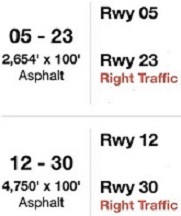
ATIS: 125.67: Copy ATIS before calling Ground
Ground: 118.4: Oshawa Ground, GVBV, main apron, request taxi to the active, VFR to Tilsonburg via shoreline, {####} feet. With Information {Bravo}
Tower: 120.1: Oshawa Tower, Piper Arrow VBV holding short Runway {XX}, ready for VFR departure to Tilsonburg.
VFR En-Route Advisory: 126.7. Set this to monitor in the 2nd Radio
Emergency: 121.5 Squawk: 7700
En-route - Toronto Terminal: 133.40:
Toronto Terminal, Piper Arrow GVBV, {5} miles North West of Oshawa at 3000 feet, Cliaming to 7500, VFR to Gore-Bay direct. Requesting flight following.
- B:12501 - 17999
En-route - Barrie Airpark (CNA3) Multicom:123.0
No need to Radio at my altitude.
- CNA3 has no known Procedures
En-route - Wiarton (CYVV) Wiarton Traffic Multicom: 122.2
No need to Radio at my altitude.
- E: GND - 3700
- London Radio: 126.7
- London Radio (FIS): 123.375
- Toronto Centre: 132.575
En-route - Tobermory (CNR4), Tobermory UNICOM: 122.8
No need to Radio at my altitude.
Flight Following Terminated
- Change Squawk VFR - 1200
- Switch Radio - 126.7 - VFR En-Route Advisory
Aproach Gore Bay-Manitoulin - CYZE - Gore Bay-Manitoulin UNICOM - 122.8
Info
- Elevation: 623'
- Reporting - Before entering the MF area (preferably at least 5 minutes prior): broadcast position, altitude, ETA, and intentions
Frequency
- AWOS: 128.725
- Gore Bay-Manitoulin Traffic Multicom: 122.8
- Toronto Center - 135.4
Runway

Gore Bay Multicom, Piper Arrow GVBV, {10} miles south east, {5500} feet, inbound via Simulated RNAV {29}, intercepting at {IMUBA}, request airport Advisory
CYOO -> CYTB (Oshawa -> Tilsonburg)
Departure from CYOO (Oshawa):
- Elevation - 460'
Runway
ATIS: 125.67: Copy ATIS before calling Ground
Ground: 118.4: Oshawa Ground, GVBV, main apron, request taxi to the active, VFR to Tilsonburg via shoreline, {####} feet. With Information {Bravo}
Tower: 120.1: Oshawa Tower, Piper Arrow VBV holding short Runway {XX}, ready for VFR departure to Tilsonburg.
VFR En-Route Advisory: 126.7. Set this to monitor in the 2nd Radio
Emergency: 121.5 Squawk: 7700
En-route - Toronto Terminal: 133.40:
Toronto Terminal, Piper Arrow GVBV, {5} miles east of your Class Charlie airspace at 2500 feet, VFR to Tilsonburg via the lakeshore. Requesting flight following and clearance through Class Charlie airspace.
- C:4501 - 12500
- C:2501-3500
- C:GRN - 2500 - City Center
En-route - City Center (CYTZ) Tower:118.2 / 119.2
City Centre Tower, VBV, {5} miles east of your zone at 2500 feet, VFR to Tilsonburg via the lakeshore, with request to transition through your Class Charlie airspace, flight following with Toronto Terminal
- C: GND - 2500
En-route -Toronto Center: 119.30
Toronto Centre, Piper Arrow GVBV, 2500 feet, VFR to Tilsonburg via the lakeshore, flight following
- C:1701 - 2000
- C:2001 - 2500
- C:2501 - 3500
- C:3501 - 4500
- C:4501- 12500
En-route via Hamilton - CHYM: 119.30
- Hamlton Tower: 125.0
Hamilton Tower, Piper Arrow GVBV, 3000 feet, VFR from Oshawa to Tilsonburg, north of your zone, request flight following
Flight Following Terminated
- Change Squawk VFR - 1200
- Switch Radio - 126.7 - VFR En-Route Advisory
Aproach Tilsonburg - CYTB - Tilsonburg Unicom - 123.0
Info
- Elevation - 893'
- Reporting - 5NM, 2300'ASL
Frequency
- ATIS - 127.8 (London)
- Emergency: 121.5 Squawk: 7700
- Multicom - 123.0 5NM 3900ASL
- Toronto Center - 135.3
Runway
Tilsonburg Unicom, Piper Arrow GVBV, {10} miles east, {3000} feet, inbound via Simulated RNAV {26}, intercepting at {DAPEB}, request airport Advisory
CYTB -> CYOO (Tilsonburg -> Oshawa)
Info
- Elevation - 893'
- Reporting - 5NM, 2300'ASL
Frequency
- ATIS - 127.8 (London)
- Multicom - 123.0 5NM 3900ASL
- Toronto Center - 135.3
- VFR En-Route Advisory: 126.7. Set this to monitor in the 2nd Radio
- Emergency: 121.5 Squawk: 7700
Runway
Tilsonburg - CYTB - Unicom - 123.0
Tilsonburg Traffic, Piper Arrow GVBV, taxing from apron for backtracking Runway{##}, VFR to Oshawa via shoreline, 3000 feet
Tilsonburg Traffic, VBV, Backtracking Runway{##} for departure, VFR to Oshawa via shoreline
Tilsonburg Traffic, VBV, lining up Runway 26 for immediate departure, VFR to Oshawa via shoreline
Tilsonburg Traffic, VBV, rolling Runway 26, VFR to Oshawa via shoreline
Tilsonburg Traffic, VBV, clear the zone to the northeast, switching to London Radio
En-route - Toronto Center: 135.3/119.30
Toronto Center, GVBV, off Tilsonburg, at {3000}, VFR to Oshawa via Lakeshore. Requesting flight following
En-route via Hamilton - CHYM: 119.30
- Hamlton Tower: 125.0
Hamilton Tower, Piper Arrow GVBV, 3000 feet, VFR from Tilsonburg to Oshawa, north of your zone, request flight following
En-Route - City Center (CYTZ) Tower:118.2 / 119.2
City Tower, Piper Arrow GVBV, {2000} feet, VFR to Oshawa. fligth following from Toronto Center, request clearance through your airspace
- C:GND - 2500
En-Route - Toronto Terminal: 133.40
Toronto Terminal, GVBV, {2000} feet, VFR to Oshawa via shoreline, flight following
- C: 2501-3500
- C: 4501 - 12500
Flight following Terminted
- Reporting - 5NM, 3000'ASL
- Elevation - 460'
- Oshawa ATIS - 125.675
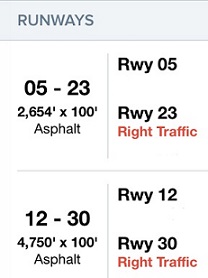
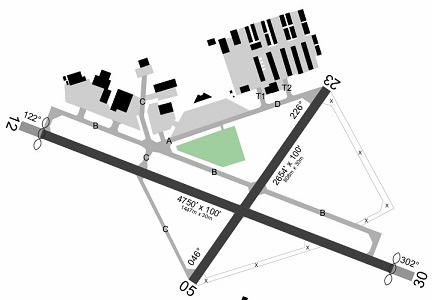
- RWY 30 Right Turn (4250 x 100)
- RWY 12 Left Turn (4250 x 100)
- RWY 23 Right Turn (2654' x 100)
- RWY 05 Left Turn (2654' x 100)
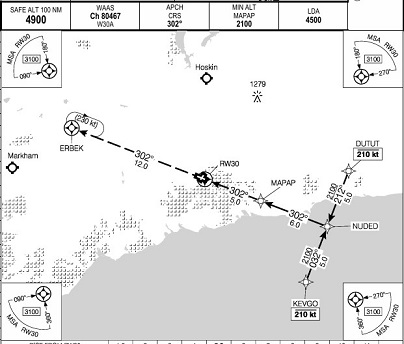
- RNAV 30 from West Join KEVGO min 2100'
- RNAV 12 from West Join OLOVU min 2300'
- RNAV 23 from West Join ITSED min 2300'
- RNAV 05 from West Join ESRUP min 2100'
Oshawa - CYOO - Oshawa Tower - 120.1
Oshawa Tower,GVBV, 10 miles west, {3000} feet, inbound full stop, with Information Bravo. Requesting Simulated RNAV {runway ##}, Intercepting {Waypoint}
Oshawa - CYOO - Oshawa Ground - 118.4
-
Oshawa Ground, VBV, Taxi to Tango 2
- Tower ··· 905-576-2398
- Oshawa Ground, VBV, Taxt Tango 2
CYOO -> CYKF (Oshawa -> Waterloo)
Departure from CYOO (Oshawa):
Elevation - 460'
ATIS: 125.67: Copy ATIS before calling Ground
Emergency: 121.5 Squawk: 7700
Ground: 118.4: Oshawa Ground, GVBV, main apron, request taxi to the active, VFR to Waterloo via shoreline, 2500 feet. With Information {Bravo}
Tower: 120.1: Oshawa Tower, Piper Arrow VBV holding short Runway {__}, ready for VFR departure to Waterloo.
En-route - Toronto Terminal: 133.40:
Toronto Terminal, GVBV, {5} miles west of your airspace, {2500}, VFR to waterloo via Lakeshore. Requesting flight following
- C:4501 - 12500
- C:2501-3500
- C:GRN - 2500 - City Center
En-route - City Center (CYTZ) Tower:118.2 / 119.2
City Centre Tower, GVBV, 2500 feet, request transition east to west.
- C: GND - 2500
En-route -Toronto Center: 119.30
Toronto Centre, C-GVBV, at 2000, VFR to Waterloo.
- C:1701 - 2000 | C:2001 - 2500 | C:2501 - 3500 | C:3501 - 4500 | C:4501- 12500
En-route - Burlington Executive (CZBA): 123.5
Burlington Executive, C-GVBV, at 2000, VFR to Waterloo.
Waterloo - CYKF - Tower - 126.0 / 118.55
Waterloo Tower,GVBV, 10 miles east, 3000feet, inbound Full stop, with Information Bravo. Requesting Simulated RNAV {runway ##}, Intercepting {Waypoint}
- Elevation ··· 1054'
- Reporting ··· 5NM, 4000'ASL
- ATIS ··· 125.1
- Emergency: 121.5 Squawk: 7700
- Reporting ··· 5NM, 4000'ASL
- RWY ··· 08 Left Turn (7003 x 148)
- RWY ··· 26 Left Turn (7003 x 148)
- RWY ··· 14 Left Turn (4103' x 148)
- RWY ··· 32 Right Turn (4103' x 148)
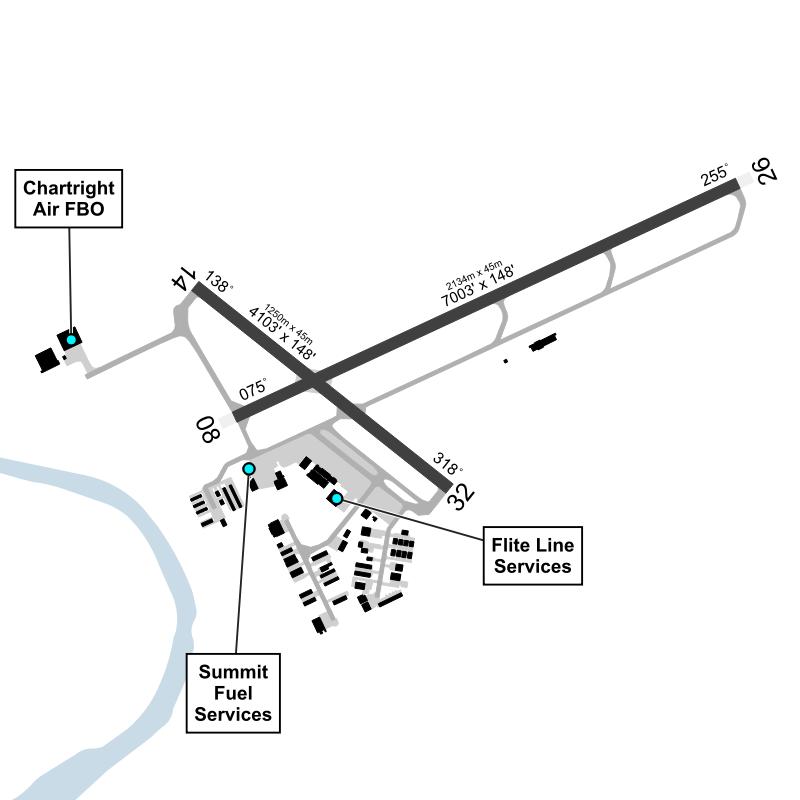
- CYKF Airport Diagram
- RNAV 08, inercepting LESAV, Full Stop
- RNAV 26, intercepting OMTED, Full Stop
- RNAV 14, intercepting ROGPA, Full Stop
- RNAV 32, intercepting PIDGA, Full Stop
Waterloo - CYKF - Ground - 121.8
Taxi to Apron 5 (Vito)
CYKF -> CYOO (Waterloo -> Oshawa)
Info
- Elevation - 1054'
- Reporting - 5NM and up to 4000'ASL
Frequency
- ATIS ··· 125.1
- Ground - 121.8
- Tower - 126.0 / 118.55
- Emergency: 121.5 Squawk: 7700
Runway
- Apron 5 (Vito)
- RWY 08 Left Turn (7003 x 148)
- RWY 26 Left Turn (7003 x 148)
- RWY 14 Left Turn (4103' x 148)
- RWY 32 Right Turn (4103' x 148)
Waterloo - CYKF - Ground - 121.8
Waterloo Ground, GVBV, in Apron 5, request taxi to the active, VFR to Oshawa via shoreline, 2500 feet. With Information {Bravo}
Waterloo - CYKF - Tower - 126.0 / 118.55
Waterloo Tower, VBV, holding short runway {XX}, Ready to departure
En-route - Toronto Center: 119.30
Toronto Center, GVBV, 10 miles East of Waterloo, at {3000}, VFR to Oshawa via Lakeshore. Requesting flight following
En-route - Burlington Executive (CZBA): 123.5
Burlington Executive, C-GVBV, at 2000, VFR to Oshawa.
En-Route - City Center (CYTZ) Tower:118.2 / 119.2
City Tower, GVBV, {5} miles West, {2000} feet, VFR to Oshawa. Requesting transition through your airspace
- C:GND - 2500
En-Route - Toronto Terminal: 133.40
Toronto Terminal, GVBV, {2000} feet, VFR to Oshawa. Requesting transition through your airspace
- C
- 2501-3500
- C
- 4501 - 12500
Oshawa - CYOO - Oshawa Tower - 120.1
Oshawa Tower,GVBV, 10 miles west, {3000} feet, inbound full stop, with Information Bravo. Requesting Simulated RNAV {runway ##}, Intercepting {Waypoint}
- Reporting - 5NM, 3000'ASL
- Elevation - 460'
- Oshawa ATIS - 125.675
- Emergency: 121.5 Squawk: 7700
- RWY 30 Right Turn (4250 x 100)
- RWY 12 Left Turn (4250 x 100)
- RWY 23 Right Turn (2654' x 100)
- RWY 05 Left Turn (2654' x 100)
- RNAV 30 from West Join KEVGO min 2100'
- RNAV 12 from West Join OLOVU min 2300'
- RNAV 23 from West Join ITSED min 2300'
- RNAV 05 from West Join ESRUP min 2100'
Oshawa - CYOO - Oshawa Ground - 118.4
-
Oshawa Ground, VBV, Taxi to Tango 2
- Tower ··· 905-576-2398
- Oshawa Ground, VBV, Taxt Tango 2
CYOO -> KTEB (Oshawa -> Teterboro)
Departure from CYOO (Oshawa):
Elevation - 460'
ATIS: 125.67: Copy ATIS before calling Ground
Set the Emergency: 121.5 on the second radio and turn on monitoring, Squawk: 7700
Ground: 118.4: Oshawa Ground, Piper Arrow GVBV at {main} Apron, VFR to Teterboro via Kingston, at 9500, request taxi to the active with Information {??}
Tower: 120.1: Oshawa Tower, Piper Arrow VBV holding short Runway __, ready for VFR departure to Teterboro.
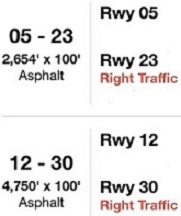
Enroute in Canada
Toronto Terminal - 133.40: Toronto Terminal, Piper Arrow GVBV, off Oshawa 3,000 climbing 9500 VFR to Teterboro via Kingston, request flight following.
Montral Center - 124.32: Montral Center, Piper Arrow GVBV, at 9500
Canada to U.S. Border Transition:
Buffalo Center - 126.55: Buffalo Center, Piper Arrow C-GVBV, 9,500 VFR inbound to Teterboro, request flight following, and Bravo clearance.
Arrival via New York Approach:
New York Approach: 126.8 / 120.8 / 118.0: New York Approach, Piper Arrow C-GVBV, VFR at 5,500, 20 miles NW of Teterboro, inbound, request Bravo clearance and landing at Teterboro.
Arrival at KTEB (Teterboro):
ATIS: 132.85
Set the Emergency: 121.5 on the second radio and turn on monitoring, Squawk: 7700
Tower: 119.5 - Teterboro Tower, Piper Arrow C-GVBV, 5 miles NW, inbound full stop, with information {??}, requesting Simulated RNAV?? intercepting {??}
Ground: 121.9 - Teterboro Ground, Piper Arrow C-GVBV, clear Runway __, request taxi to Hangar 1.
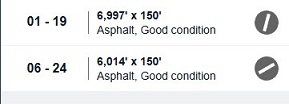
KTEB -> CYOO (Teterboro -> Oshawa)
Departure from KTEB (Teterboro):
ATIS: 132.85 / 114.2 - Copy ATIS before calling clearance.
Set the Emergency: 121.5 on the second radio and turn on monitoring, Squawk: 7700
Clearance Delivery: 128.05: Teterboro Clearance, Piper Arrow C-GVBV, VFR to Oshawa, request flight following.
- Purpose: Obtain a discrete transponder code for flight following.
- Avoid Class B airspace violations by getting proper VFR routing or initial departure instructions.
- Coordinate with NY TRACON (Newark/NY Approach) since TEB lies under Class B airspace and is extremely busy.
- It helps deconflict your departure path from IFR jets arriving/departing from nearby Newark (EWR), LaGuardia (LGA), and JFK.
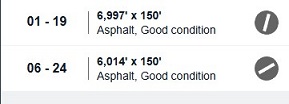
Ramp Control - 130.575: Signature West Ramp, Piper Arrow C-GVBV at spot __, request taxi to the active with information [letter]
Ground Control - 121.9: Teterboro Ground, Piper Arrow C-GVBV off Signature West, ready to taxi, VFR to Oshawa, taxi with information {??}
Tower - 119.5 / 125.1: Teterboro Tower, Piper Arrow C-GVBV holding short Runway __, ready for departure to Oshawa.
Climb & Transition through NY Airspace:
Newark Departure - 119.2 / 126.7: Newark Departure, Piper Arrow CGVBV, off Teterboro, at 2000 climbing 8500 VFR to Oshawa, request flight following and Class B transition.
NY Approach Sectors - 127.6 / 120.8 / 126.8: As directed by ATC handoff.
Enroute toward Canadian Border:
Buffalo Center: 126.55 - Buffalo Center, Piper Arrow C-GVBV, VFR at {altitude}, enroute to Oshawa, request flight following.
Re-entry into Canada:
Toronto Terminal: 133.40 - Toronto Terminal, Piper Arrow GVBV, VFR inbound to Oshawa, {25} miles south, request flight following.
Arrival at CYOO (Oshawa):
Elevation - 460'
ATIS - 125.675: Copy weather before contacting terminal or tower.
Set the Emergency: 121.5 on the second radio and turn on monitoring, Squawk: 7700
Tower / MF: 120.1 - Oshawa Tower, Piper Arrow GVBV, {5} miles south, inbound for full stop, with information {letter}. requesting simulated RNAV{#}.
Ground Control - 118.4: Oshawa Ground, VBV clear of Runway __, taxi to T2
CYOO -> KART (Oshawa -> Watertown International)
Departure from CYOO (Oshawa):
Elevation - 460'
ATIS: 125.67: Copy ATIS before calling Ground
Set the Emergency: 121.5 on the second radio and turn on monitoring, Squawk: 7700
Ground: 118.4: Oshawa Ground, Piper Arrow GVBV at {main} Apron, VFR to Teterboro via Kingston, at 9500, request taxi to the active with Information {??}
Tower: 120.1: Oshawa Tower, Piper Arrow VBV holding short Runway __, ready for VFR departure to Teterboro.
Enroute in Canada
Toronto Terminal - 133.40: Toronto Terminal, Piper Arrow GVBV, off Oshawa 3,000 climbing 9500 VFR to Watertown International via Kingston, request flight following.
Montral Center - 124.32: Montral Center, Piper Arrow GVBV, at 9500
Transition via Trenton (CYTR)
- ATIS: 135.45
- Tower: 128.7 - Trenton Tower, Piper Arrow GVBV, at {9500}, Reqesting Transitioning Delta Airspace to the East, VFR to Watertown International via Kingston
Transition via Kingston (CYGK)
- ATIS: 135.55
- Kingston Traffic Multicom: 122.5 - Kingston Traffic, Piper Arrow GVBV, at {9500}, Transitioning Echo Airspace via south, VFR to Watertown International
Canada to U.S. Border Transition:
Boston Center - 135.25: Boston Center, Piper Arrow C-GVBV, 9,500 VFR inbound to Watertown, request flight following
Watertown area / Arrival:
Wheeler-Sack Approach(serves KART): 124.875 Piper Arrow C-GVBV, 15 miles West of Watertown International, at {9,500}, Decending to {4000}, inbound for landing and full stop.
Arrival at KART (West of Watertown International):
Set the Emergency: 121.5 on the second radio and turn on monitoring, If Emeregency Squawk: 7700
ATIS: 132.325
UNICOM: 123.00 - Watertown UNICOM, Piper Arrow C-GVBV, 15 miles West of the field, inbound full stop, with information {??}, requesting Simulated RNAV?? intercepting {??}
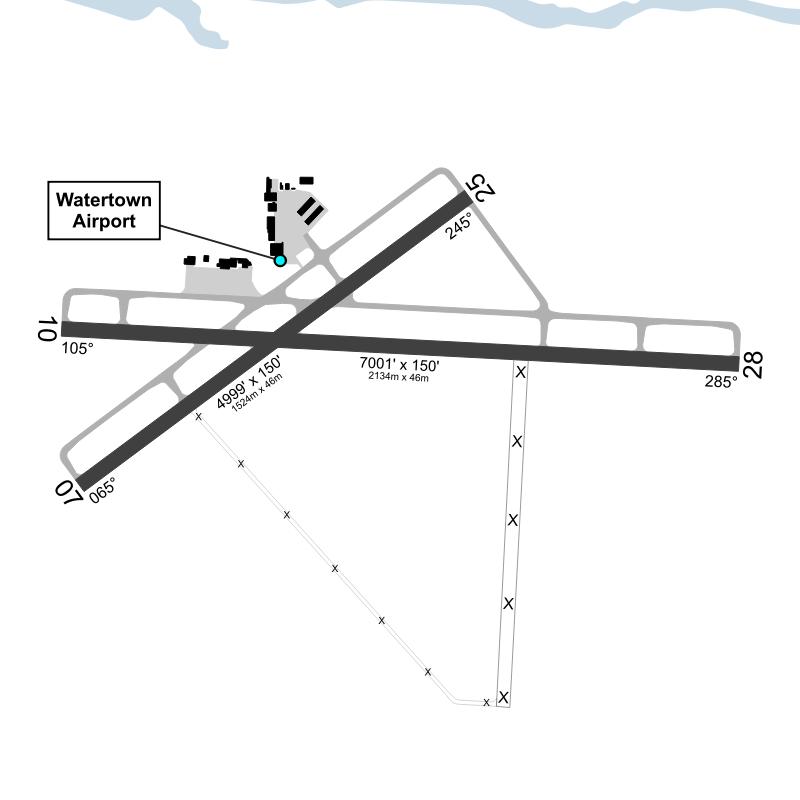
KART -> 3N6 (Watertown International -> Old Bridge)
Departure from KART (Watertown International):
Elevation - 331'
Set the Emergency: 121.5 on the second radio and turn on monitoring, If Emeregency Squawk: 7700
ATIS: 132.325
UNICOM: 123.00 - Watertown UNICOM, Piper Arrow C-GVBV,
KART → WAYGO (NY waypoint)
Boston Center (ZBW) - 135.25 / 123.875: Bosten Center, Piper Arrow C-GVBV, departed from Watertown International {3,000} climbing {9500} VFR to Old Bridge (3N6), request flight following.
WAYGO → PLEXS:
New York Center (ZNY) - ???.??: New York Center, Piper Arrow C-GVBV, 9,500 VFR to Old Bridge (3N6), request flight following
Old Bridge, NJ — 3N6 (Destination) / Arrival:
Nearby weather: BLM AWOS-3 121.625, LDJ AWOS-3 124.025.
UNICOM: 123.075
McGuire Approach/Departure (overlying TRACON): 126.475
GCO for CD (to MIV Radio): 121.725 (if needed)
Wheeler-Sack Approach(serves KART): 124.875 Piper Arrow C-GVBV, 15 miles West of Watertown International, at {9,500}, Decending to {4000}, inbound for landing and full stop.
Arrival at KART (West of Watertown International):
Set the Emergency: 121.5 on the second radio and turn on monitoring, If Emeregency Squawk: 7700
ATIS: 132.325
UNICOM: 123.00 - Watertown UNICOM, Piper Arrow C-GVBV, 15 miles West of the field, inbound full stop, with information {??}, requesting Simulated RNAV?? intercepting {??}
3N6 -> Oshawa (Old Bridge -> Oshawa)
Old Bridge, NJ — 3N6 (Departure):
Elevation: 87'
Nearby weather: BLM AWOS-3 121.625, LDJ AWOS-3 124.025.
UNICOM: 123.075
McGuire Approach/Departure (overlying TRACON): 126.475
GCO for CD (to MIV Radio): 121.725 (if needed)
Wheeler-Sack Approach(serves KART): 126.475 Piper Arrow C-GVBV, departing from Watertown International, VFR Direct to Oshawa Canada (CYOO), at 8500, requesting flight following
En-route (NJ/PA → central NY) – US side:
Expect handoff from McGuire to New York Center (ZNY); common low-sector freqs along this corridor include 132.10 and 134.60. (ATC will assign the exact one.)
Western NY (Rochester/Buffalo area) – US side:
Center: Cleveland Center (ZOB) “Buffalo Low” 125.20 (Dunkirk RCAG)
Terminal if you get close to BUF/Niagara: Buffalo Approach 126.15 / 126.50.
Crossing to Canada (Niagara/Hamilton area):
Toronto Centre (Hamilton Sector) 132.475.(outside/above terminal airspace)
Toronto Terminal: 119.30
En-Route - City Center (CYTZ) Tower:118.2 / 119.2
City Tower, GVBV, {5} miles West, {2000} feet, VFR to Oshawa. Requesting transition through your airspace
- C:GND - 2500
En-Route - Toronto Terminal: 133.40
Toronto Terminal, GVBV, {2000} feet, VFR to Oshawa. Requesting transition through your airspace
- C
- 2501-3500
- C
- 4501 - 12500
Oshawa - CYOO - Oshawa Tower - 120.1
Oshawa Tower,GVBV, 10 miles west, {3000} feet, inbound full stop, with Information Bravo. Requesting Simulated RNAV {runway ##}, Intercepting {Waypoint}
- Reporting - 5NM, 3000'ASL
- Elevation - 460'
- Oshawa ATIS - 125.675
- Emergency: 121.5 Squawk: 7700
- RNAV 30 from West Join KEVGO min 2100'
- RNAV 12 from West Join OLOVU min 2300'
- RNAV 23 from West Join ITSED min 2300'
- RNAV 05 from West Join ESRUP min 2100'
Oshawa - CYOO - Oshawa Ground - 118.4
-
Oshawa Ground, VBV, Taxi to Tango 2
- Tower ··· 905-576-2398
- Oshawa Ground, VBV, Taxt Tango 2